

The Intellectual Property Office of New Zealand (IPONZ) has provided valuable guidance on design validity, authorship, and the treatment of technical defects in design registrations in its rejection of an application to cancel a registered boat design.

The decision in Marinecraft Limited v Stabicraft Marine Limited [2026] NZIPODES 2 provides businesses investing in industrial design, with greater certainty regarding both the scope and durability of registered design protection.
Stabicraft sought cancellation of New Zealand Design Registration No. 433971, owned by Marinecraft, on four grounds, alleging that the design was not new or original, that a director of Marinecraft, Michael Stenton, was not the true author of the design, and that the design representations did not clearly identify the scope of protection.
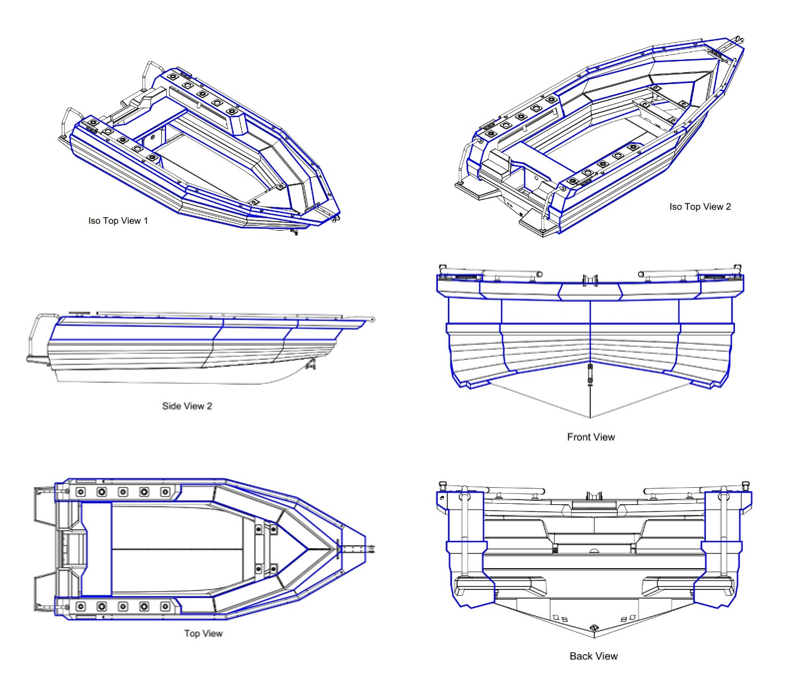
Marinecraft - NZ Design No 433971
The most significant aspect of the decision concerned Stabicraft’s argument that Marinecraft’s design differed from an earlier Stabicraft design only in “immaterial details”. Stabicraft identified several alleged minor differences, including the bow rise angle, pontoon profiles, and coaming geometry. The Hearing Officer rejected this approach, criticising what was described as a “divide and conquer” strategy that focused on individual design features in isolation rather than comparing the designs as a whole. After considering the overall visual impression created by each boat hull, the Hearing Officer found that the two designs were “distinctly different”. For the same reason, Stabicraft’s prior-use argument based on the manufacture and use of its 1450 Explorer vessel was rejected. Consequently, the novelty challenge failed.
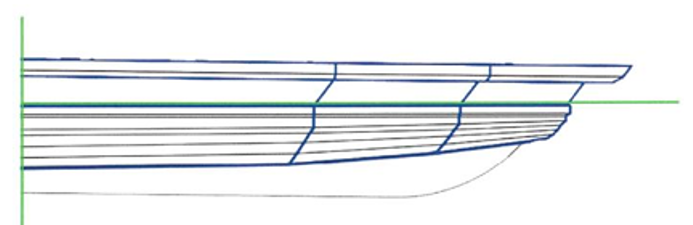
Marinecraft - NZ Design No 433971
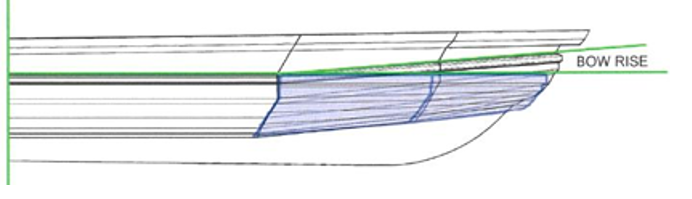
Stabicraft- NZ Design No 427187
Stabicraft’s ownership-based challenge also proved unsuccessful. A key feature of the case was that one of Marinecraft’s directors, Michael Stenton, had previously worked for Stabicraft for over 20 years and was involved in the development of the 1450 Explorer. The Hearing Officer found insufficient evidence that Marinecraft had copied a substantial part of the artistic works in which Stabicraft owned copyright. While the two vessels shared some common features typical of pontoon boat construction, the overall visual effects of the respective designs were materially different.
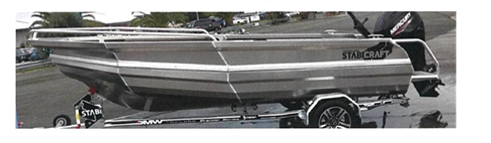
Stabicraft 1450 Explorer
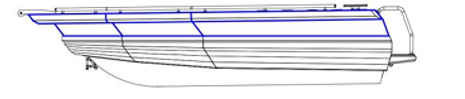
Marinecraft - NZ Design No 433971
Stabicraft was also unsuccessful in seeking cancellation on the basis that the design representations did not clearly identify the scope of protection. The Hearing Officer agreed that the novel features of the design registration were not shown consistently across all drawings. However, the representations, when viewed collectively and read alongside the statement of novelty, were considered sufficiently clear. Cancellation was therefore regarded as a disproportionate remedy.
The decision confirms that in New Zealand, design validity is assessed by reference to the overall visual impression rather than by dissecting out individual features. It also demonstrates IPONZ’s pragmatic reluctance to invalidate registrations for technical deficiencies that do not create genuine uncertainty about the scope of protection.